 BeeKeepClub Resources and Guides for Beekeepers

If you purchase an independently reviewed item through our site, we earn an affiliate commission. Read our affiliate disclosure.
Oxalic acid has gained a lot of ground as Varroa mite treatment in honey bees. Indeed, the natural organic acid has a high kill rate per application, quickly ridding your beehive of Varroa mites. In this guide, we look at oxalic acid treatment for Varroa mites in honey bees. The various methods of application and their advantages feature prominently. We also outline for you a few other things that you should take into consideration when treating Varroa mites in honey bees using oxalic acid.
Fogging with Oxalic Acid
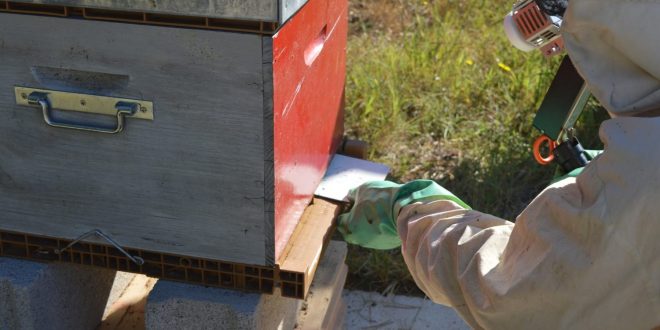
Fogging with oxalic acid is a very fast and effective method of oxalic acid application. It releases a puff of hot oxalic acid vapor into the hive. The vapor cools on the surfaces of the treated beehive. Mites then come into contact with the acid as they move around the hive. Beekeepers use an oxalic acid fogger, such as the Varomorus Propane Insect Fogger in this application method.
Advantages of Fogging
- Fogging gets the job done quickly. In under an hour, a beekeeper can treat a very large number of beehives.
- You get an even distribution of oxalic acid in the beehive.
- It is easy to monitor and adjust the temperature of the fogger. Some foggers even have temperature readouts on them.
Disadvantages of Fogging
- Using a fogger may cause you to inhale oxalic acid by accident. Caution must be taken to be upwind of the fogger just in case an accidental puff of vapor comes from the fogger.
- Propane foggers are generally purchased at a higher cost than other oxalic acid application equipment. They, however, save you significant amounts of money in the long term.
How to Fog Your Beehive
- Firstly make sure you have all the materials, equipment, and tools needed to carry out fogging.
- Prepare an appropriate oxalic acid solution and put it in the fogger’s oxalic acid tank.
- Attach the acid tank to the fogger,
- Attach any extension rods to the fogger if you so wish.
- Connect the propane gas to the fogger and light the fogger. Some foggers have igniters to make lighting the fogger easy. If your fogger runs on electricity, connect it to the power source and turn it on.
- Once the fogger is hot enough, give it a few trigger presses to see how much oxalic acid fog comes out.
- Approach the beehive from behind and remove the plug covering your pre-drilled fogging hole.
- Fog the beehive and replace the plug cover for the fogging hole.
- You may seal hive openings for a few minutes to prevent oxalic acid fog from leaving the beehive.
Vaporization with Oxalic Acid
Vaporization is one of the easy and inexpensive methods of oxalic acid application. It puts to use equipment called a vaporizer. The vaporizer has an acid pan on one end that is heated. Various heating methods are used by different manufacturers of oxalic acid vaporizers. Heating elements and glow plugs are the most popular heating technologies used. The acid pan in a vaporizer can get very hot. Beekeepers using a vaporizer to apply oxalic acid in a beehive should take care not to touch hot acid pans.
The acid pan in a vaporizer is held in place by a metal rod with a handle. Some vaporizers have electric wiring in the rod or outside it. All oxalic acid vaporizers run on electricity. DC power is required for the vaporizer to work. Beekeepers use various DC power sources to run their vaporizers. Car batteries, 12V motorcycle batteries, and tractor or lawn mower batteries are used. Before commencing vaporization, make sure your battery is well charged to avoid inconveniences during vaporization.
Advantages of Vaporization
- Vaporization achieves high temperatures that are great for oxalic acid sublimation. Electricity is a reliable way to power beekeeping equipment and is used in vaporizers.
- Purchasing a vaporizer does not drain your wallet. This is a major consideration for new or hobbyist beekeepers who do not want to spend much on bees.
- Oxalic acid vaporizers last for a long time without breaking down. If anything stops working, a vaporizer is easy to repair. Some DIY beekeepers have made vaporizers that work very well.
- Heating oxalic acid with a vaporizer is done in the beehive. This greatly reduces the risk of beekeepers getting exposed to oxalic acid vapor. Inhaling oxalic acid vapor is very injurious to your respiratory system.
Disadvantages of Vaporization
- This method of oxalic acid application puts a heat source in your beehive. The vaporizer must be positioned in the beehive, at the bottom, and close to the center. If there is beeswax near the vaporizer, it may get ignited by the hot acid pan and cause a fire in the beehive.
- Treatment of one hive takes more than 10 minutes. Additionally, significant time is lost between successive beehive treatments. The vaporizer must be allowed to cool before acid is put in the pan for the next use. Beekeepers may use a bucket of water to cool the acid pan faster between hive treatments.
- You have to keep loading oxalic acid in the vaporizer for every hive treatment. The constant contact with oxalic acid increases the risk of exposure and subsequent oxalic acid poisoning.
- Beekeepers approach the beehive they are treating from the front. It inconveniences bees, aggravates them, and makes them more likely to want to sting beekeepers.
How to Carry Out Vaporization
- Assemble all the equipment and tools you need for vaporization.
- Place some oxalic acid in the acid pan of the vaporizer.
- Place the vaporizer in the beehive, preferably at the bottom. Have the acid pan at the center of the beehive.
- Plug shut all holes that may allow oxalic acid vapor to leave the hive.
- Connect the vaporizer to your DC power source and allow it to heat up.
- Once you are sure all oxalic acid has been vaporized, disconnect the vaporizer from the power source.
- Wait at least 10 minutes and then remove the vaporizer. You may keep the beehive openings shut for a further 10 minutes.
Trickling with Oxalic Acid
Heating oxalic acid to high temperatures and applying it in the beehive is frowned upon by some beekeepers. As such, they opt to use trickling as their preferred method of oxalic acid treatment for Varroa mites in honey bees. Trickling applies oxalic acid into the beehive by putting it in a solution and releasing it slowly from absorbent materials. Fabric and other absorbent materials such as paper towels are the favored trickling materials.
Advantages of Trickling
- Releasing oxalic acid slowly in the hive at a constant rate gives very effective Varroa mite control.
- Trickling does not require beekeepers to repeat treatments. A single application lasts for a long time when done properly.
Disadvantages of Trickling
- Bees ingest more oxalic acid and may suffer ill health, resulting in a loss of hive productivity.
- You have to visit the hive again after some time has elapsed since initial treatment. This is due to the need to remove the absorbent material that you had put in the beehive. Bees may help with this, but you have to make sure.
- Not as efficient as other methods of oxalic acid application if you have a large number of hives.
How to carry out Trickling
- Collect all the materials, tools, and equipment you will need.
- Prepare a trickling solution of oxalic acid.
- Soak your absorbent material in the oxalic acid solution you prepared.
- Open up the beehive and place the absorbent material with oxalic acid in the hive.
- Wait until the oxalic acid is released in the beehive and remove the absorbent material.
